A multi-tool is one of the most versatile tools for both professional tradesmen and enthusiastic DIYers. By simply changing the saw blade or accessory, you can saw, sand, cut, scrape, and remove grout. A multi-tool is particularly useful in places where a regular saw or grinder cannot easily reach.
But what exactly can you use a multi-tool for? Below we list 10 tasks where a multi-tool can save you a lot of time and effort.
1. Cutting skirting boards to size
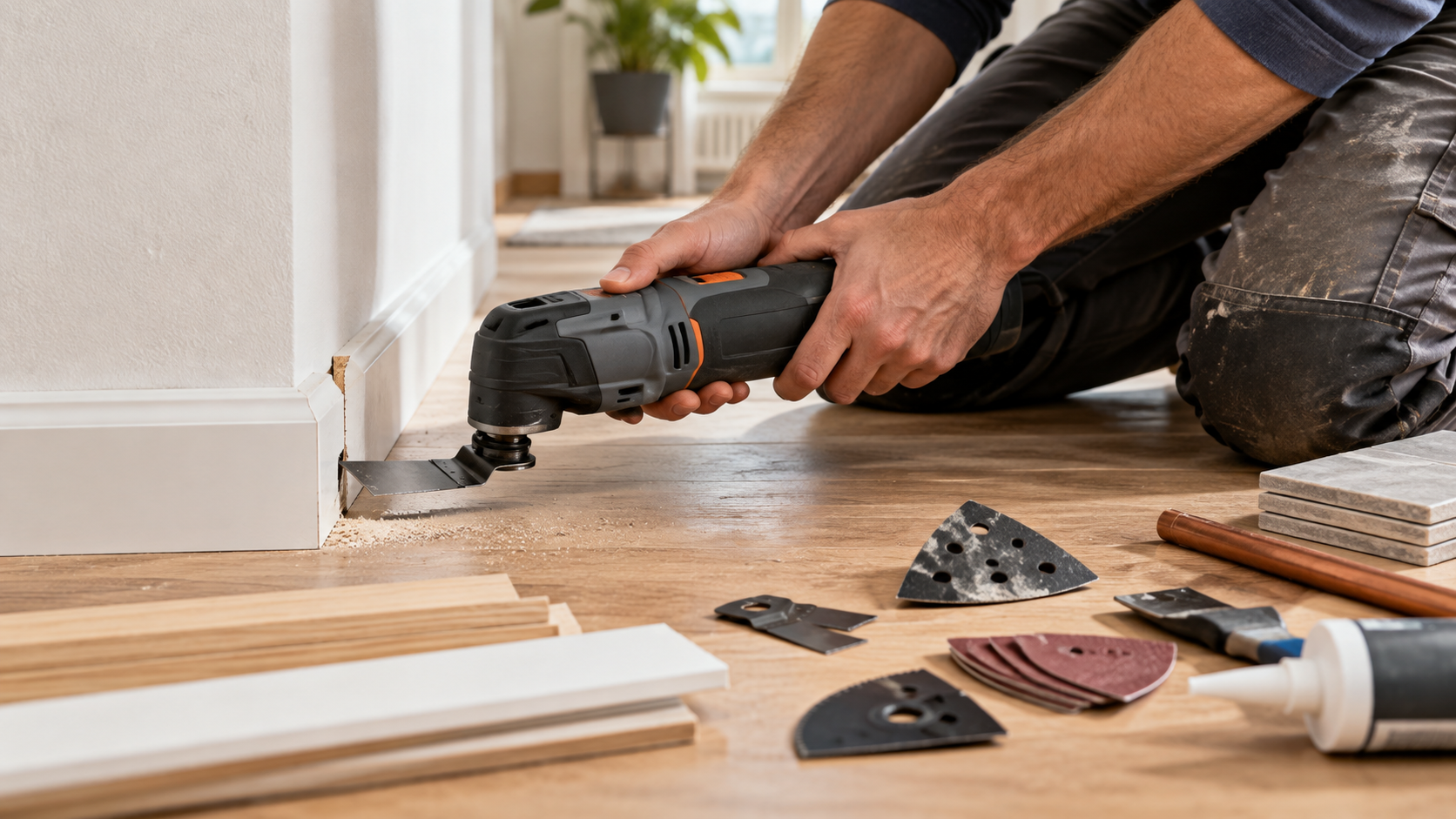
A multi-tool is ideal for shortening or trimming skirting boards. Because the saw blade is small and precise, you can also saw flush against a wall or floor. This is especially useful when a skirting board is already installed and you need to make room for a cabinet, pipe, or new flooring.
2. Shortening a door frame for new flooring
Are you laying laminate, parquet, or PVC flooring? The flooring often needs to run neatly under the door frame. With a multi-tool, you can easily cut the frame to the correct height. Use a piece of the new flooring as a height guide and then cut the frame flush.
3. Making cutouts in wood
With a plunge saw blade, you can start sawing in the middle of a piece of wood. This makes a multi-tool perfect for creating cutouts in furniture, wooden panels, floors, or kitchen cabinets.
For example, you can create an opening for an electrical outlet, pipe, cable, or ventilation grille.
4. Removing old sealant
Old sealant around a bath, shower, sink, or door frame can be quite difficult to remove. With a suitable knife or scraper blade for the multi-tool, this becomes much faster.
You can precisely cut away the sealant without having to work for hours with a hand knife.
5. Removing tile grout
Do you want to replace a damaged tile? The grout around the tile usually needs to be removed first. For this, you can use a diamond or carbide segment saw blade.
With a multi-tool, you can carefully work through the grout without damaging the adjacent tiles.
6. Cutting off protruding nails and screws
Do you come across a protruding nail, screw, or bolt during a renovation? With a bi-metal saw blade, you can cut it flush with the surface.
This is useful, for example, when removing old door frames, wooden structures, or floor panels.
7. Shortening pipes and plastic tubing
Plastic pipes and tubing can also easily be shortened with a multi-tool. The main advantage is that you need very little space to saw.
This allows you to work in hard-to-reach places, such as under a kitchen cabinet, behind a toilet, or in a utility room.
8. Sanding small surfaces
With a triangular sanding pad, your multi-tool becomes a compact sander. This is particularly useful for corners, edges, and small surfaces.
For example, you can sand door frames, stair treads, furniture, and other areas that are difficult to reach with a large sander.
9. Removing adhesive and flooring residues
When removing flooring, tiles, or other materials, adhesive residues are often left behind. With a scraper blade, you can remove these residues from the substrate relatively easily.
Old paint, sealant, flooring, and other stubborn residues can also be removed in this way.
10. Working in hard-to-reach places
Perhaps the biggest advantage of a multi-tool is that you can use it in places where other power tools simply do not fit.
Thanks to the compact head and oscillating motion, you can saw close to walls, in corners, and between structural components. This makes a multi-tool particularly suitable for renovation and repair work.
The right saw blade makes the difference
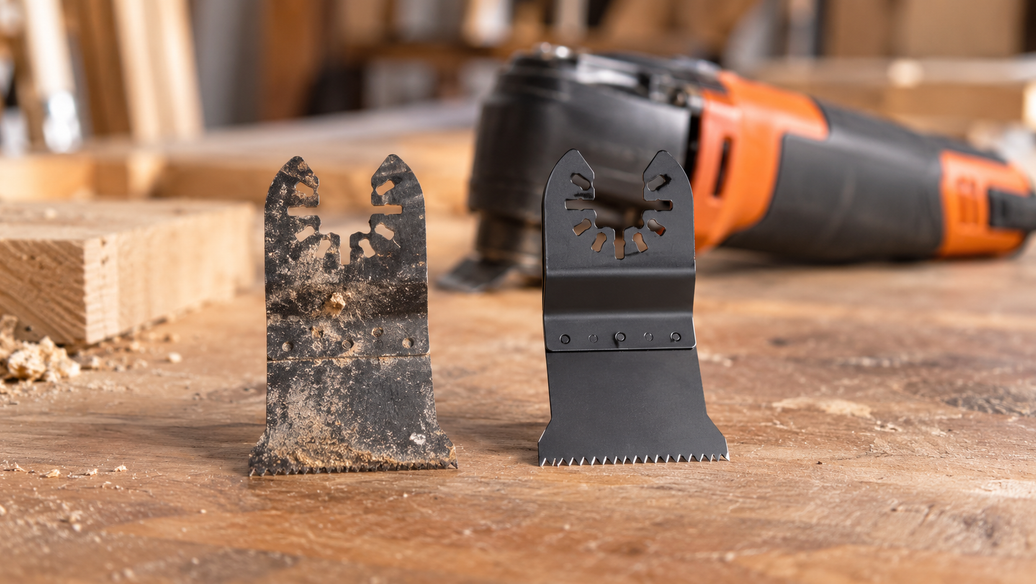
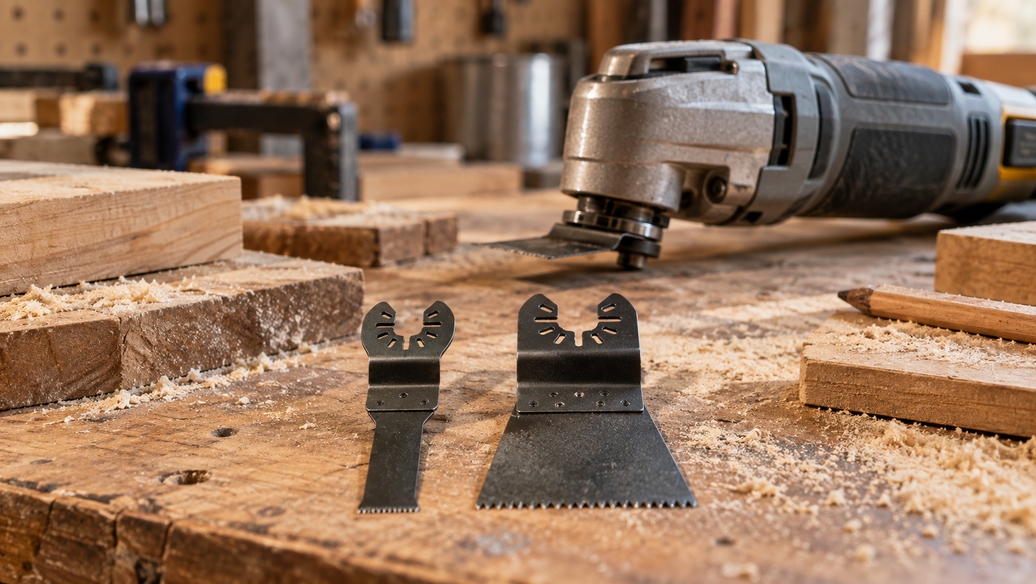
A multi-tool is versatile primarily because of the different types of saw blades and accessories. The saw blade you need depends on the material you want to work on.
- Wood saw blade: for wood, MDF, chipboard, and plastic.
- Bi-metal saw blade: for wood with nails, screws, and thin metal.
- Carbide saw blade: for hard materials and heavy-duty use.
- Diamond saw blade: for grout, tiles, and stone-like materials.
- Scraper blade: for sealant, adhesive, and other residues.
A multi-tool for almost any job
From shortening a door frame to removing tile grout, a multi-tool can be used for a surprising number of tasks. It is almost indispensable for precision work and jobs in hard-to-reach places.
However, always make sure you use a saw blade that is suitable for the material you are going to work on. With the right multi-tool saw blade, you will work faster and more precisely, and the blade will also last longer.
Looking for the right saw blade for your job?
Browse MultiToolWorld's range of multi-tool saw blades and choose the blade that suits the material you want to work on.